Theory of Transformation
What is transformation? Since everything changes—including ourselves—it seems almost too large to define. But from an engineer’s perspective, the problem can be broken down. I see transformation as rearrangement: moving many small bits from one configuration to another. When natural organisms grow, they rearrange their cells and molecules. We use mechanics to achieve a similar effect.
Transformation represents a way of designing that goes beyond conventional design elements—shape, color, space—to shape behavior itself. Objects can expand, retract, fold, deploy, and change shape. Transformable design offers a strategy for adapting to a rapidly changing world.
— Chuck Hoberman
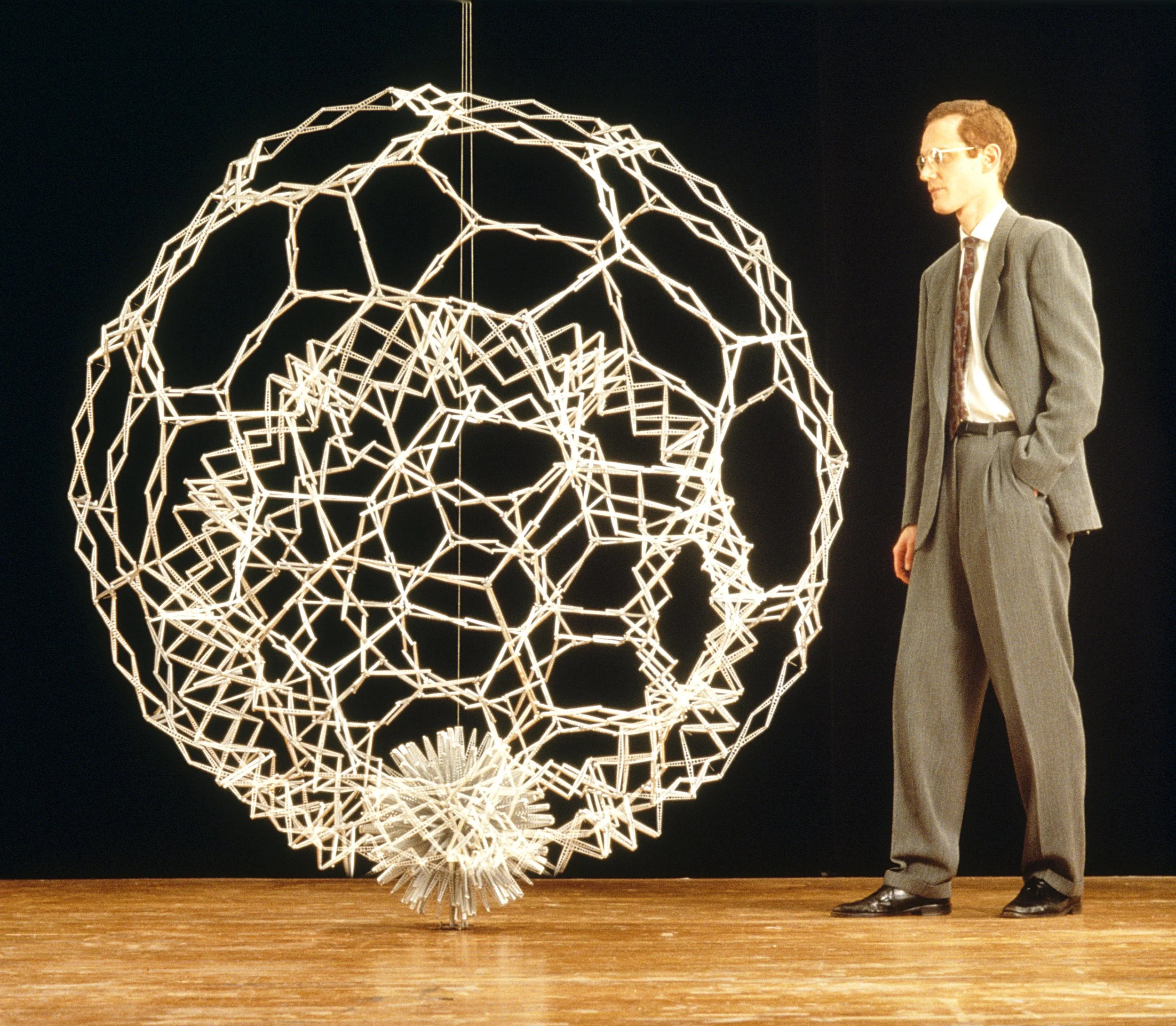
1991 Metal Hoberman Sphere Prototype
1973 Kinetic ride-on sculpture
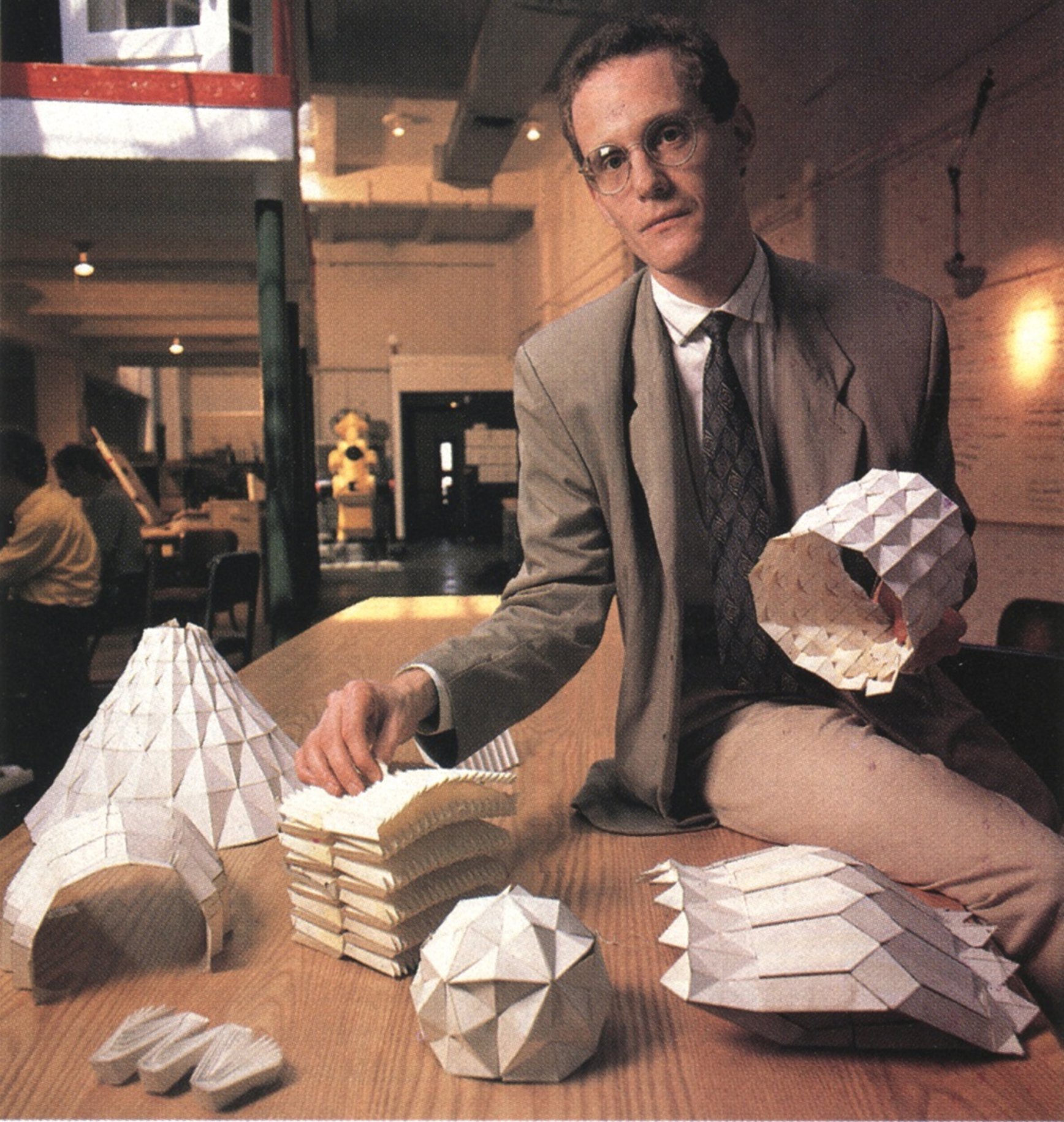
1988 Pop-up origami studies
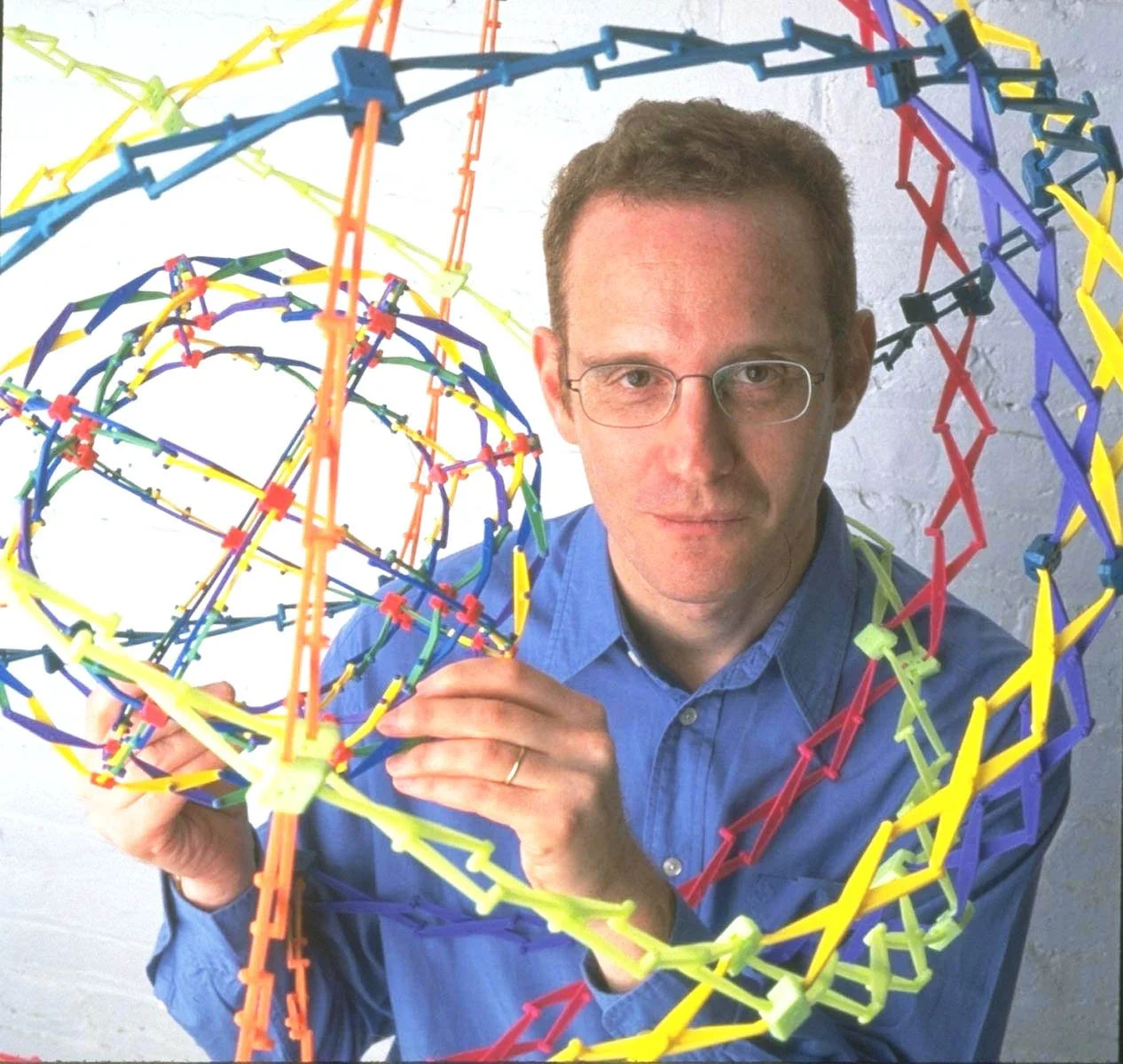
1998 With Hoberman Sphere Toys
Studio
Hoberman Associates is a multidisciplinary practice specializing in transformable design. We create products, structures, and environments that change their size and shape. Across a range of industries and applications, we focus on fostering a dynamic relationship between product and user.
Our design medium is behavior itself.
Elegance and economy remain preeminent values of good design. An elegant mechanism can translate a simple push or pull into rich and complex behavior. We are interested in how a few carefully considered mechanical elements can produce movement, adaptability, and entirely new ways of interacting with an object.
We believe that a world undergoing accelerating change needs an adaptive, interactive approach to design. Whether inventing a rapidly deployable shelter, redefining portability for children’s products, or collaborating with architects to develop next-generation adaptive buildings, our clients seek us out to shape change—and inspire it.
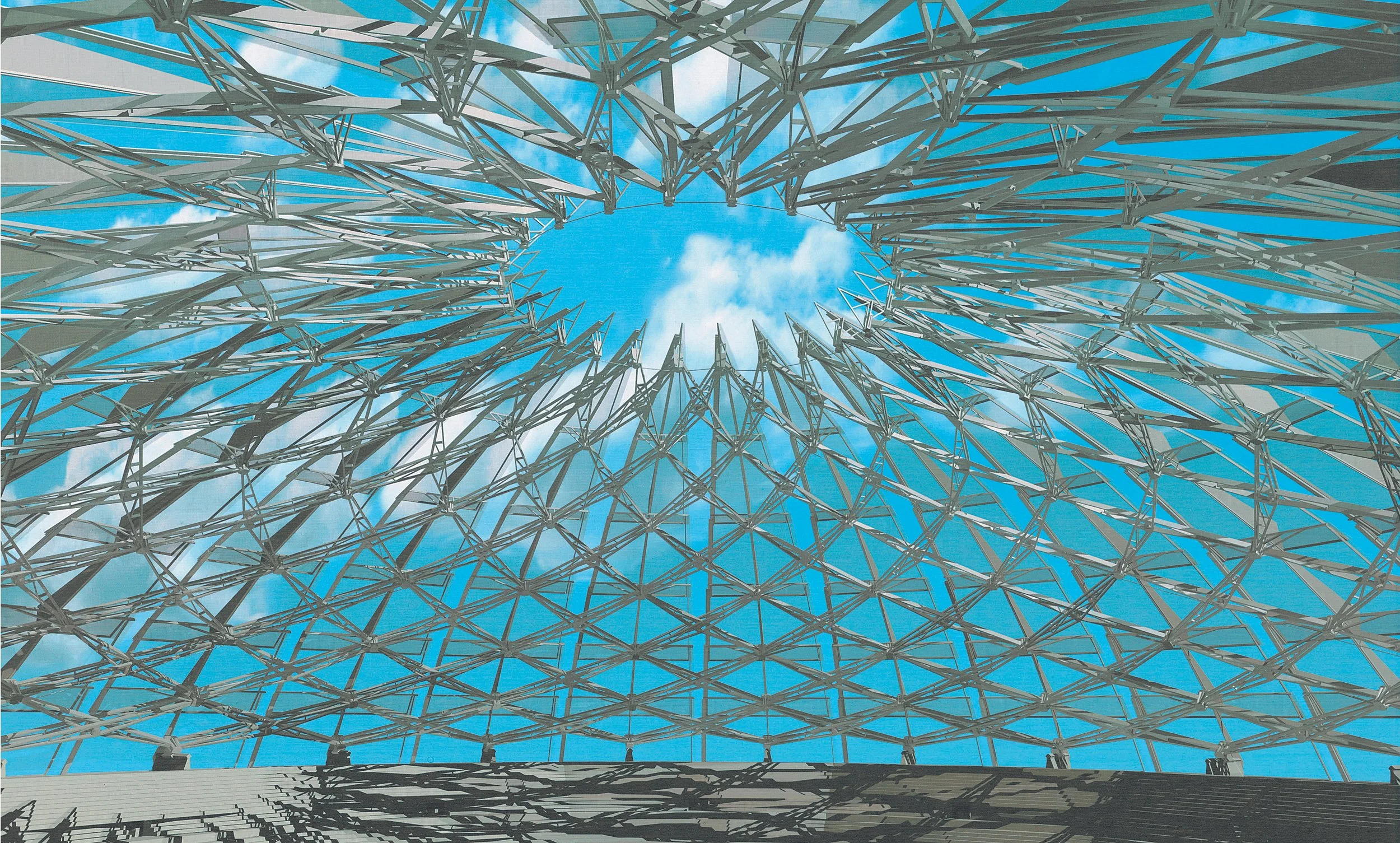
1994 Iris Dome render at MoMA
2017 Mercedes-Benz Stadium Retractable Roof
2009 U2 Tour Transformable Video Screen
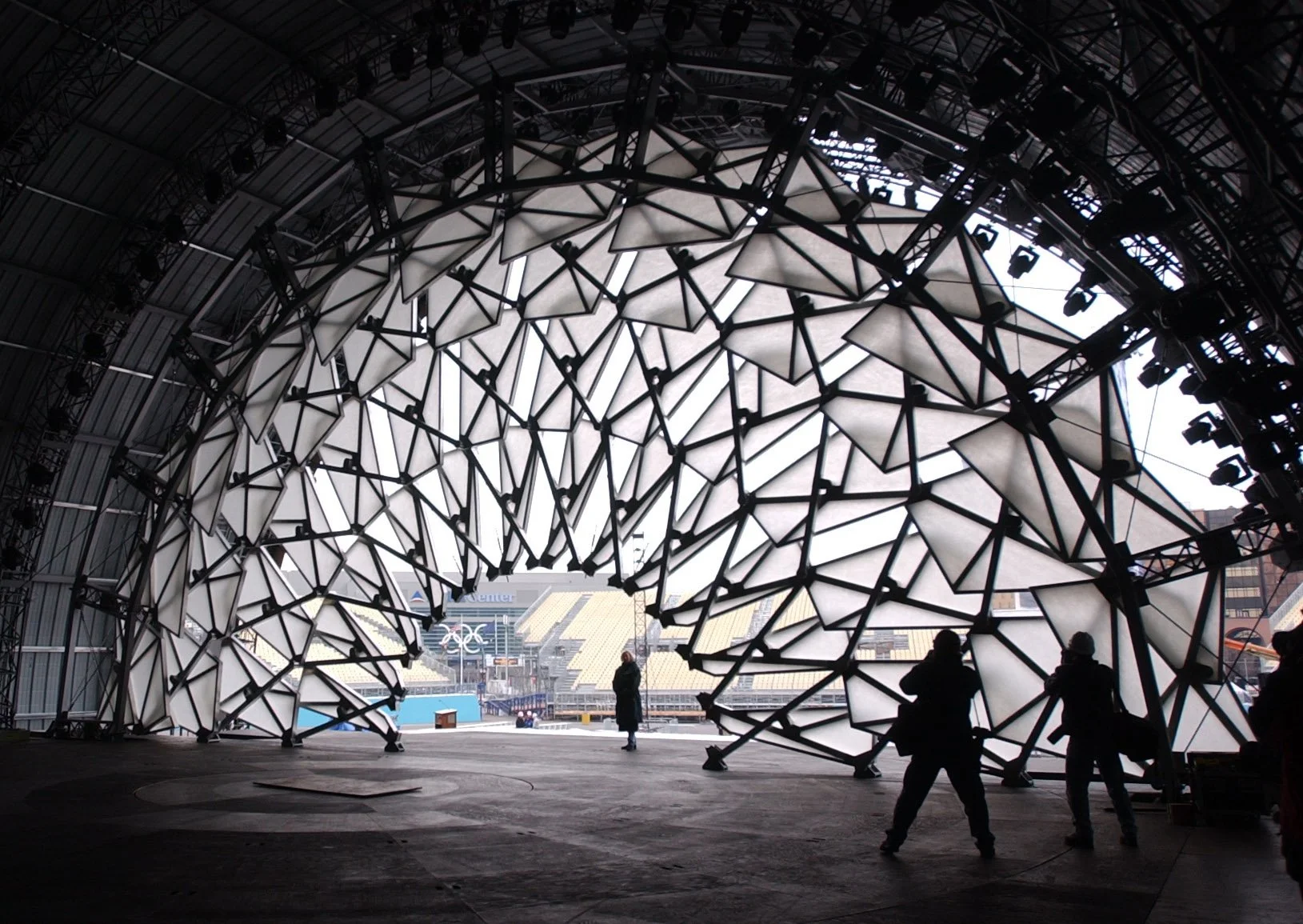
2002 Olympic Arch
Profile
When we are contacted by a potential client, we first seek to understand how physical transformation can help solve a problem or achieve a goal. We quickly assess the opportunity and identify potential directions by considering three fundamental questions:
What type of transformable behavior is needed?
What precedents are applicable? These may come from our intellectual property and past work, or from other technologies and fields.
Is the project feasible? Can the goal be achieved within the required timeline and budget?
Our process draws on a distinctive set of engineering and design methods developed through decades of work in transformable systems. We apply these methods across industries and markets, always in close collaboration with our clients.
Hoberman often partners with Articulated Artworks, LLC, founded by Matthew Davis, who has been partnering with Hoberman for over 25 years. Working alongside an extensive network of fabricators and other specialists, they have successfully delivered many of Hoberman’s major projects.
IP development can be an integral aspect of commercial strategy. Functional differentiation can create new opportunities for a product, while strong intellectual property can help protect that differentiation.
We therefore approach invention not only as a means of solving a design problem, but as an opportunity to create new capabilities, new experiences, and new value.
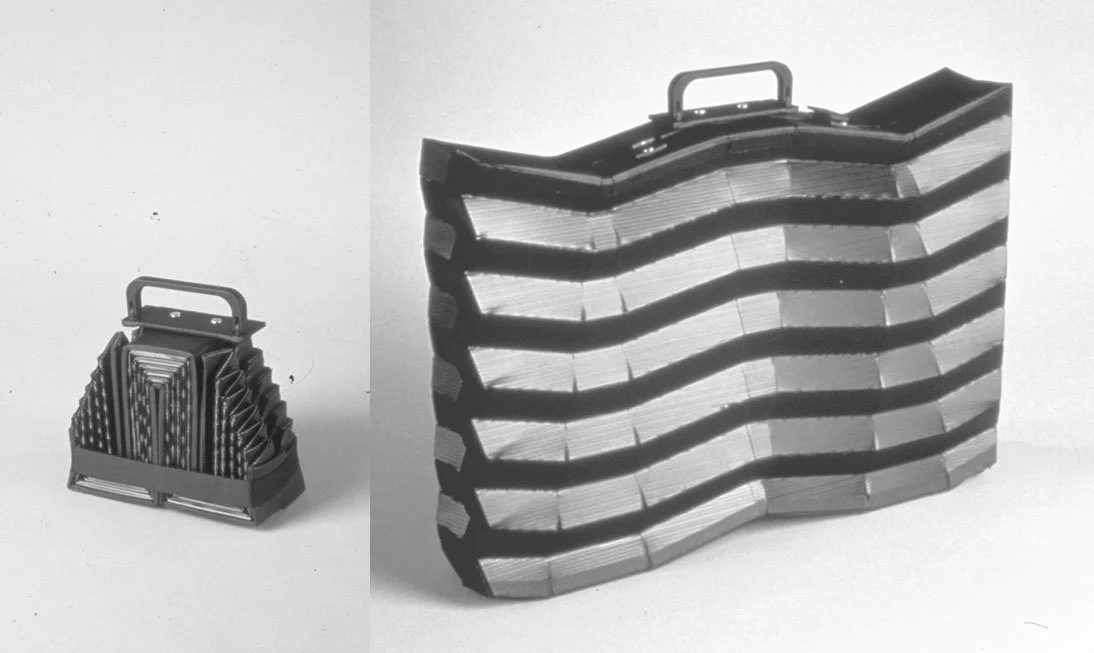
1991 Foldable Briefcase

Design Work-Flow Diagram
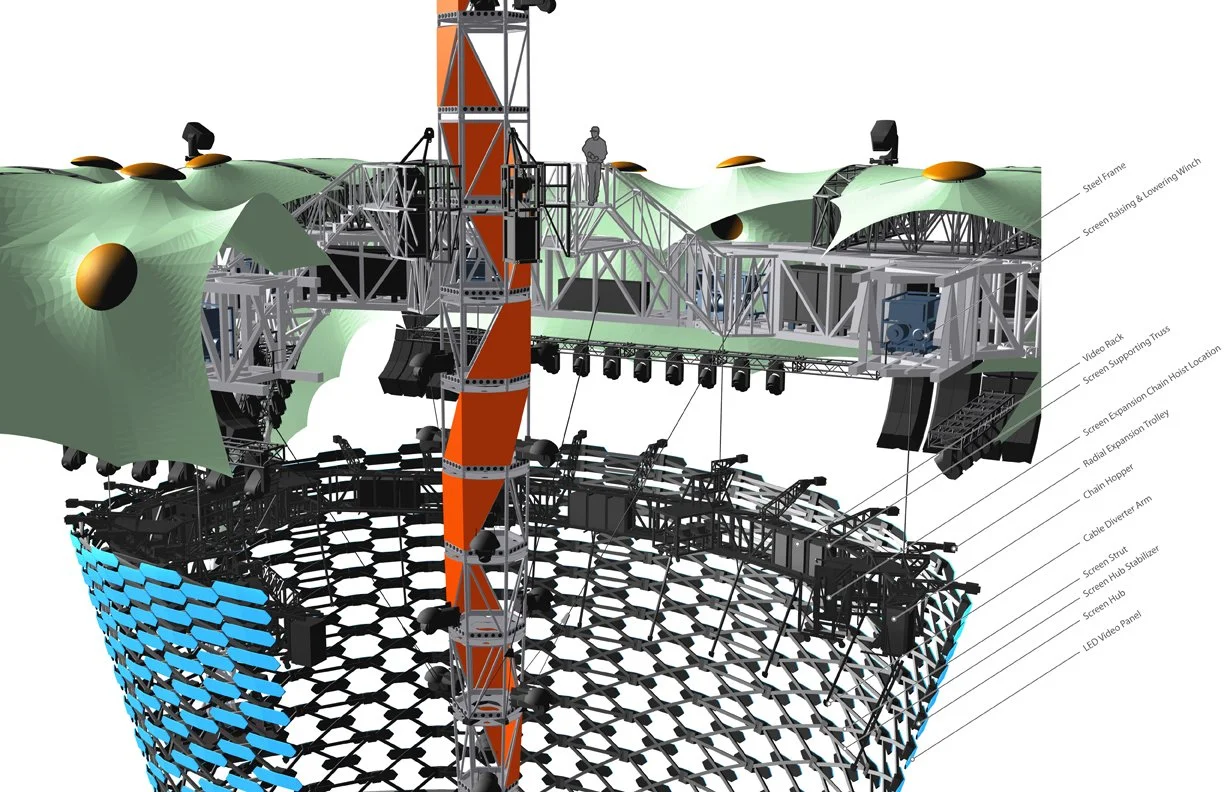
2008 U2 Transformable Screen Section Detail
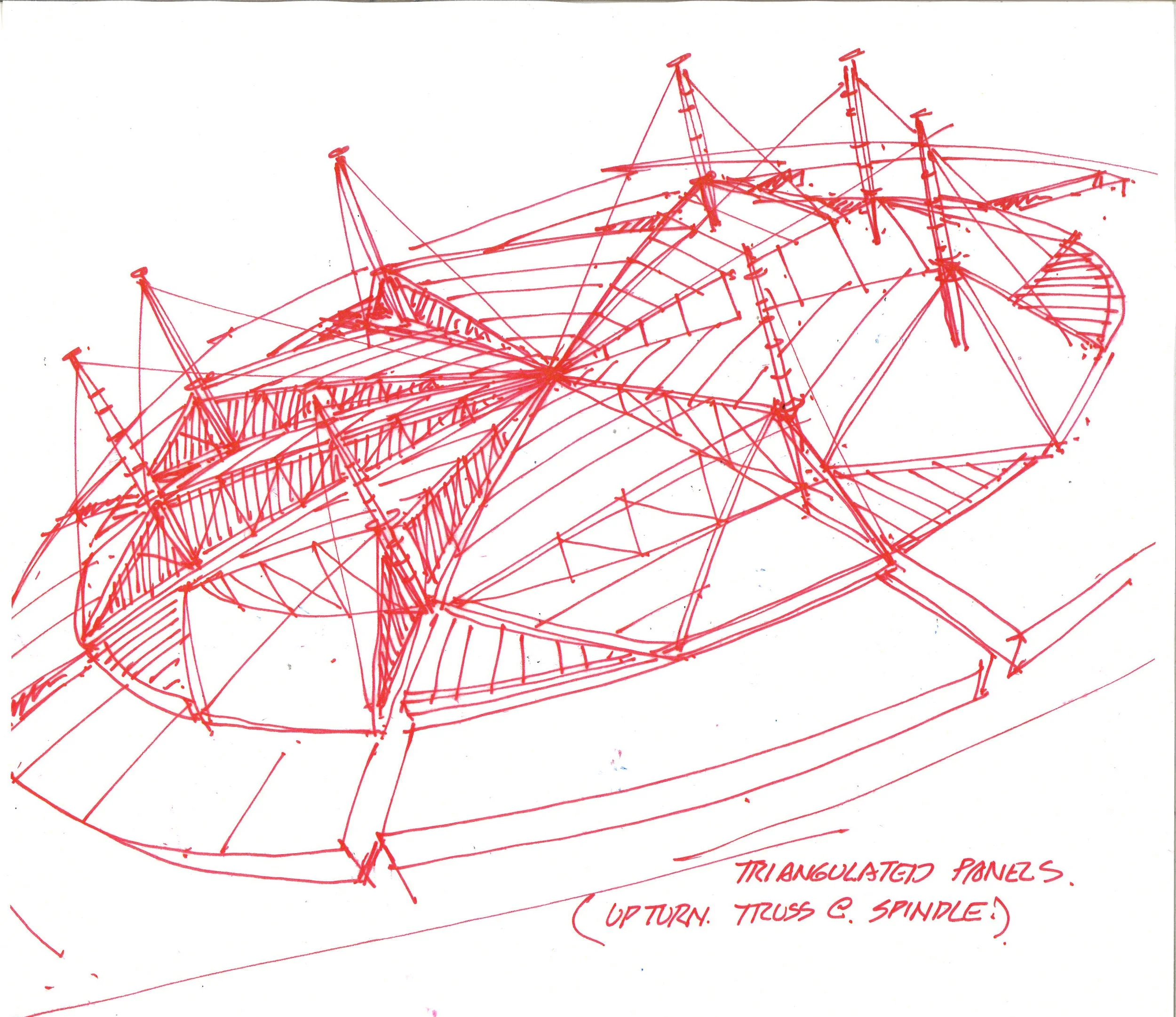
2013 Mercedes Benz Retractable Roof sketch
Clients
Architecture & Art
We collaborate with leading architecture and engineering firms to create transformable designs that address environmental challenges while redefining architectural space and experience.
Events & Entertainment
From rock concerts and theme parks to sporting events and global spectacles, Hoberman creates large-scale, dynamic structures and experiences for audiences worldwide. Clients include Disney, the NFL, U2, and the Winter Olympics.
Commissioned Art & Exhibits
We create commissioned artworks and installations for private and institutional collections, ranging from intimate pieces to major public works. Our work has been exhibited at MoMA, Cooper Hewitt, Centre Pompidou, the Canadian Centre for Architecture, and the Building Centre in London.
Science Museums
Hoberman’s interactive installations bring together art, mathematics, engineering, and technology. Exhibited in science museums around the world, these works explore subjects including growth, cellular structures, cosmology, and force and motion—and support STEM and STEAM education.
Products
Hoberman applies transformable design to toys and consumer products, combining art, engineering, and functionality. The iconic Hoberman Sphere has sold tens of millions of units. Clients have included Graco, Herman Miller, Johnson Outdoors, Spin Master, and TOMY.
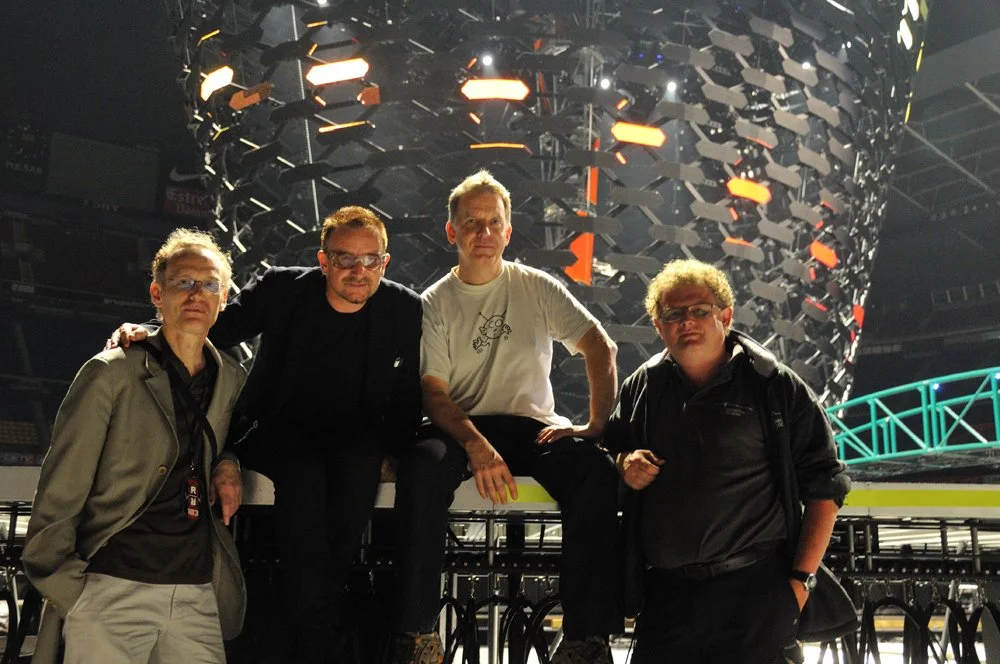
2009 U2 and Hoberman (Barcelona)
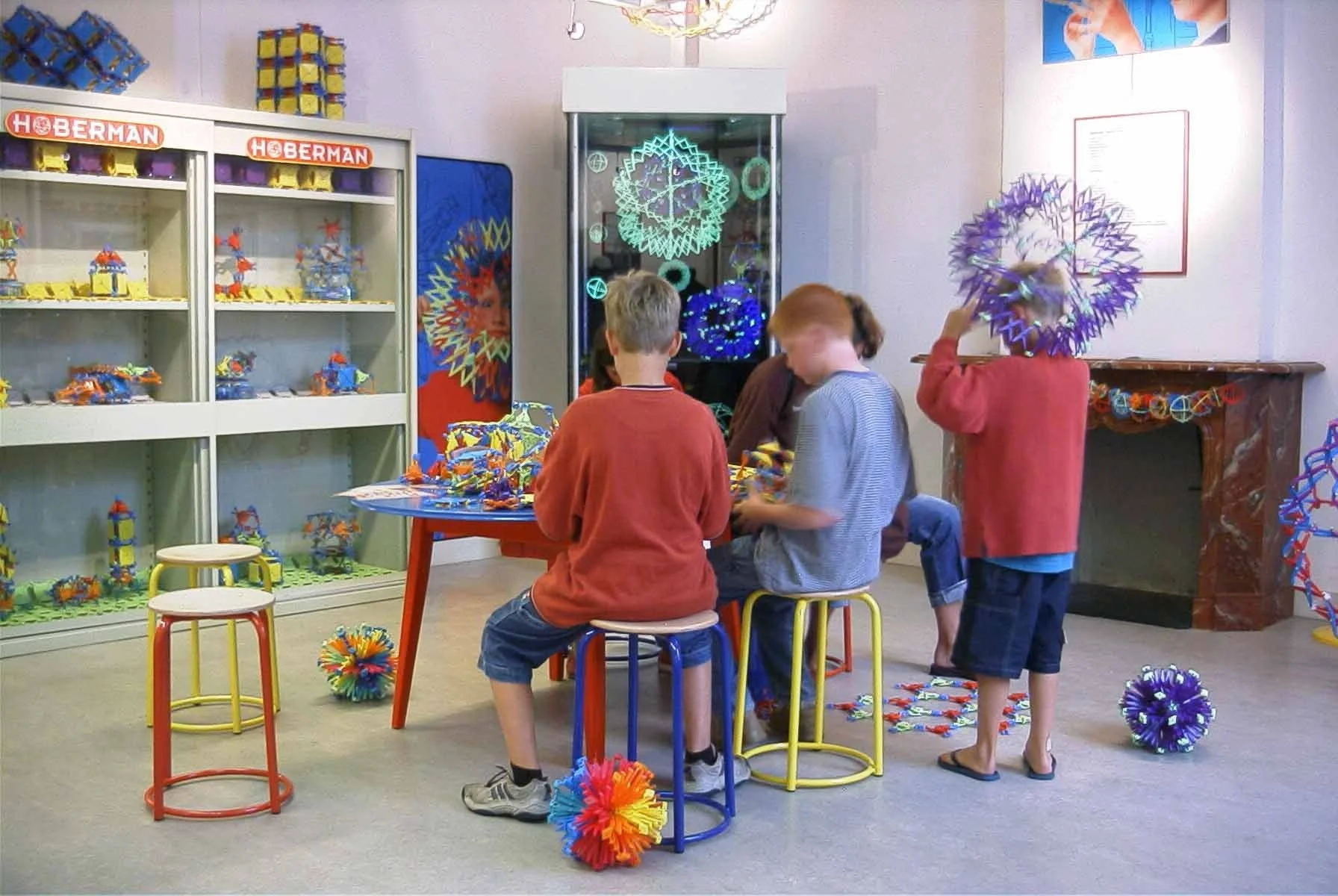
2002 Eldhom Children’s Museum (Netherlands)
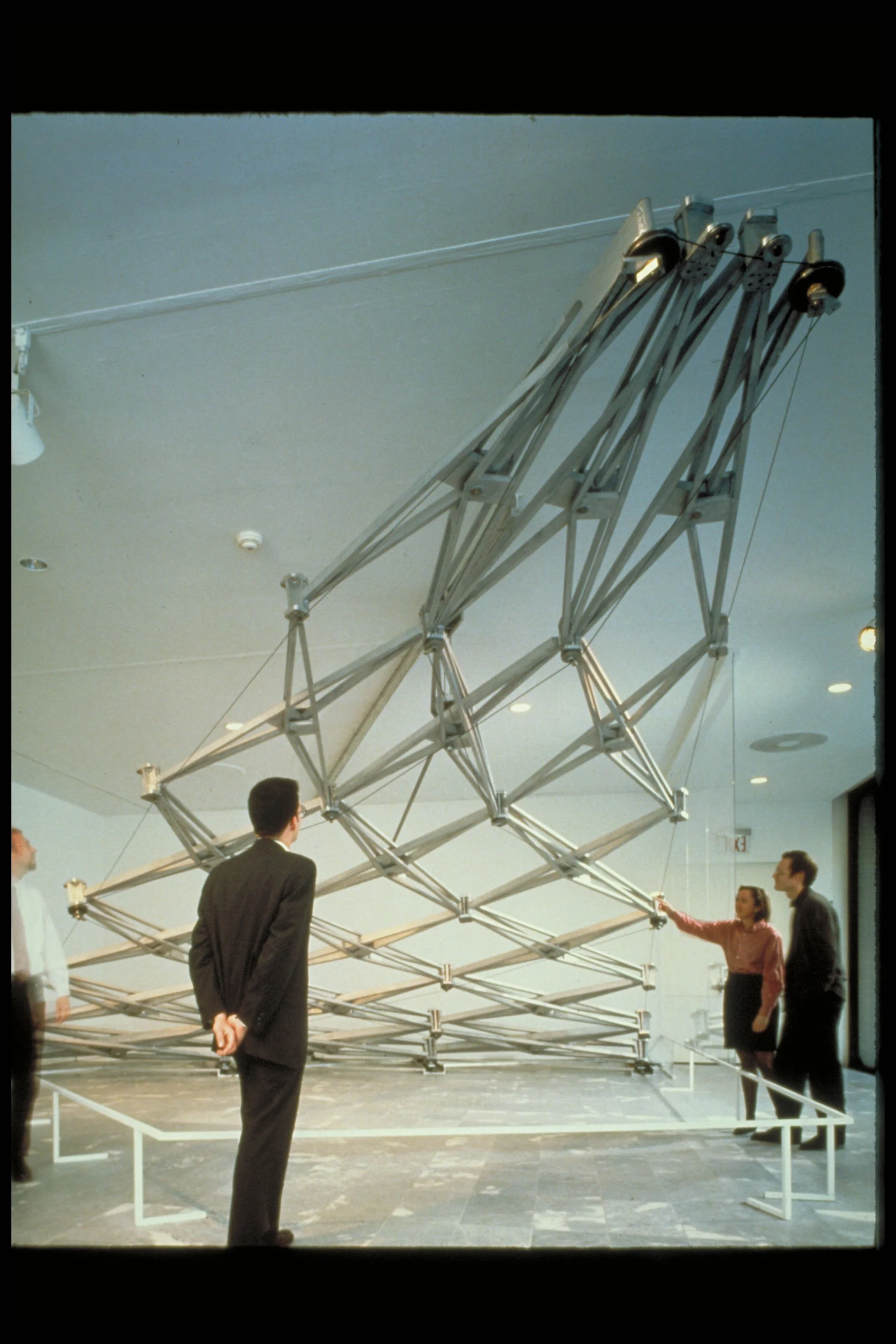
1994 Iris Dome at MoMA (NYC, USA)
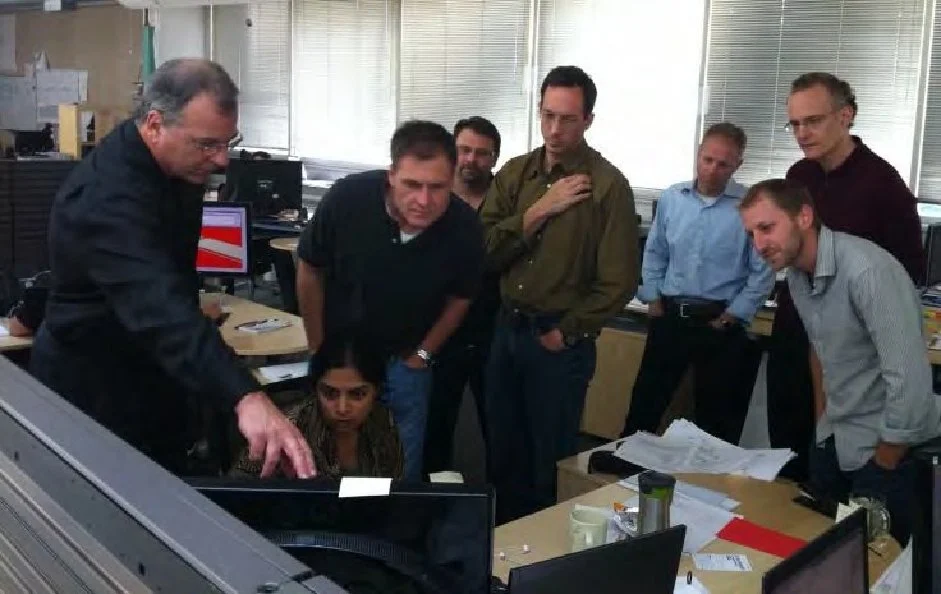
2010 Zahner Metals (Kansas City, USA)
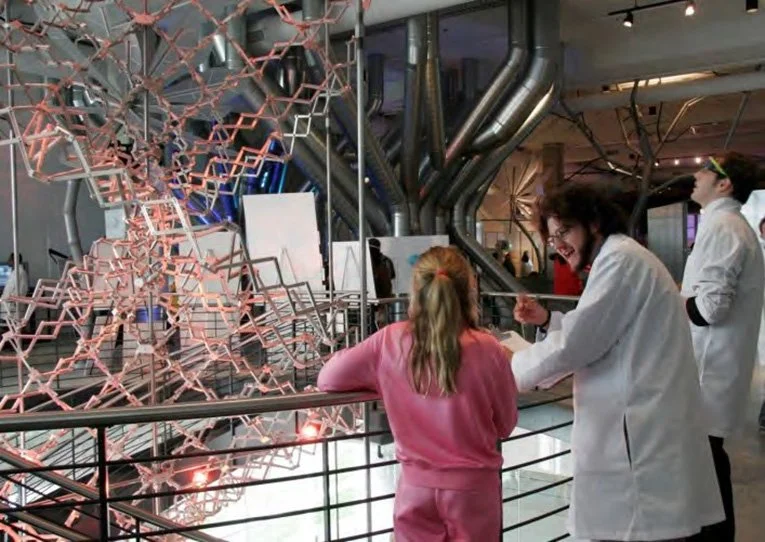
2006 Discovery World (Milwaukee, USA)
The Hoberman Sphere
The original invention for the Hoberman Sphere was patented in 1990, and has appeared continuously – whether as a toy, for large-scale installations or theatrical events - ever since.
The toy has been sold around the world in the tens of millions, and is known from countless television shows and movies, including The Office, Saturday Night Live, Grace & Frankie, and Big Bang Theory.
Large versions have been installed on 4 continents for science museums, corporate spaces, and public art pieces.
One of our best-known museum pieces, the original Hoberman Sphere, was installed in 1992 as the central exhibit in the Liberty Science Center’s atrium. Suspended by cables, the 700-pound aluminum sphere expands and contracts smoothly and continuously. Throughout its long history, the sphere has become the icon for the museum, logging millions of cycles.
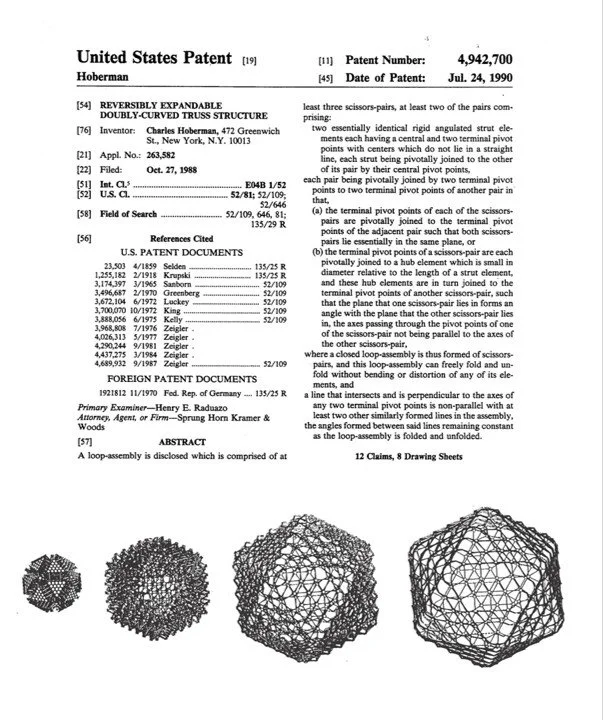
1990 US Patent
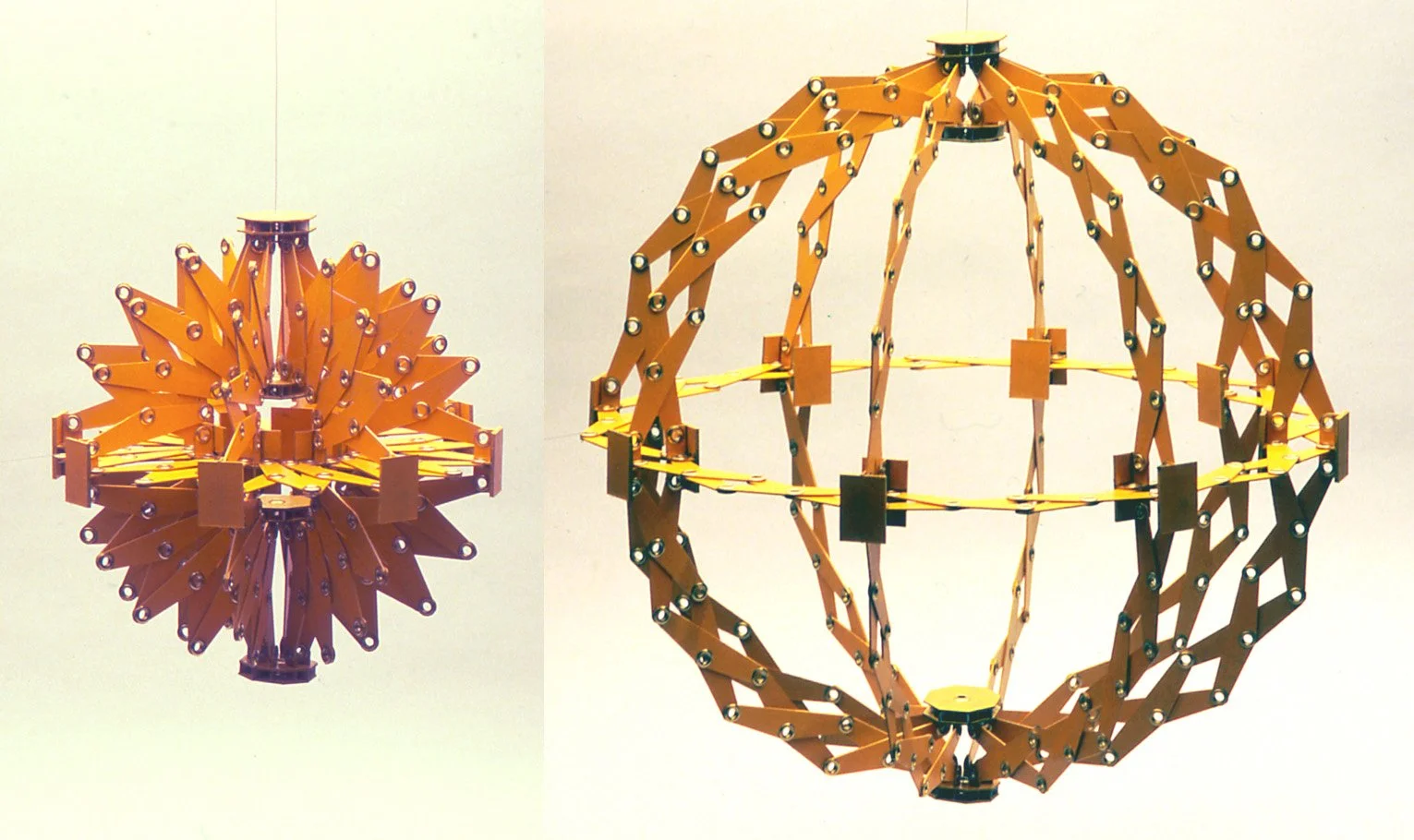
1989 Sphere prototype
1990 Testing the Original Hoberman Sphere
2014 Barack Obama at White House science fair

1998 Hillary and Bill Clinton with Hoberman Sphere Toy
2026 Milan Cortina Winter Olympics Lighting Ceremony
CONTACT
Hoberman Associates, Inc.
254 36th St. Building 2, 5th Floor, Space B537
Brooklyn, NY 11232-2401
General Information:
associates@hoberman.com